
One cat grazes. The other finishes a bowl and goes looking for more. That is the sort of problem the SureFeed Microchip Pet Feeder is built to address. Its lid opens for the right pet. It stays shut for others.
I would consider it for a multi-pet home with food stealing or separate diets. I would not buy it to serve meals while I am away. You still fill the bowl and set each meal size. You clean the parts. You check that each pet eats.
This review covers the standard SureFeed Microchip Pet Feeder. It has no app or timed food dispenser. That limit is key. Is it worth the cost for your cats?
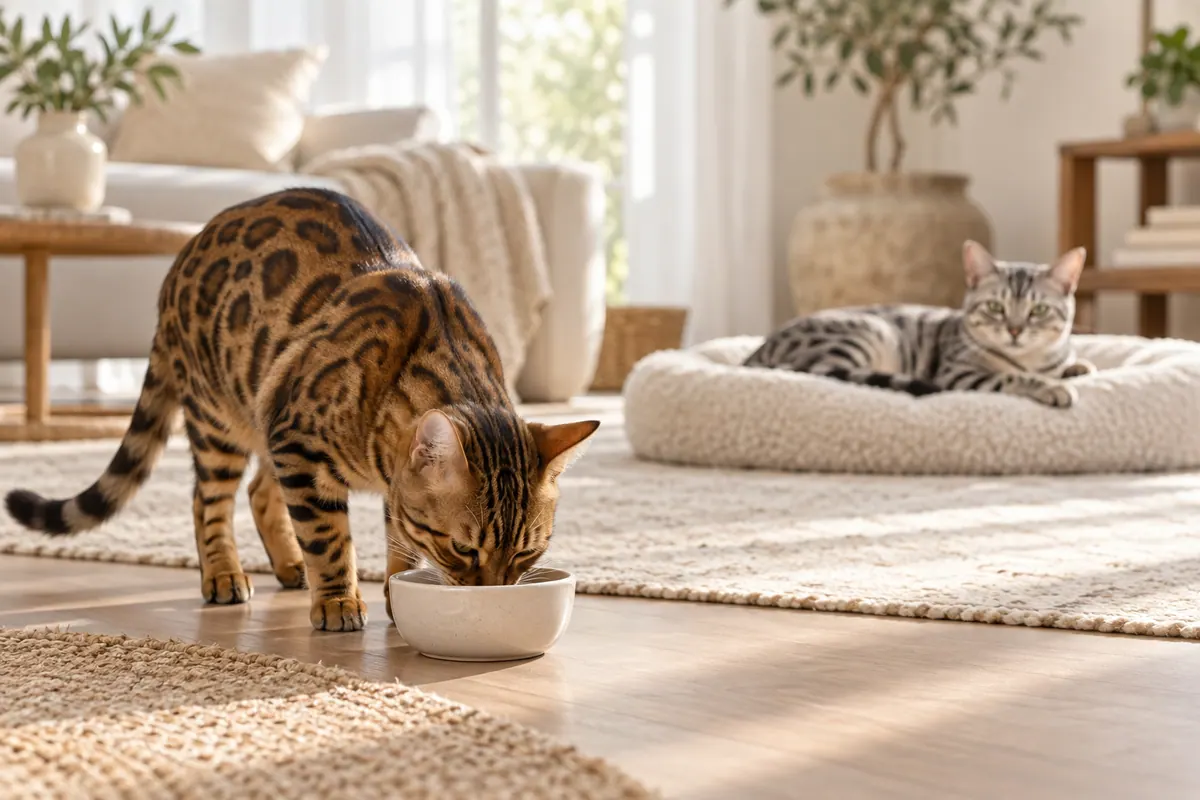
SureFeed Microchip Pet Feeder: the useful facts
| Feature | What it means at home |
|---|---|
| Microchip or RFID collar tag access | Registered pets can open the lid |
| 400 ml bowl | You fill and portion wet or dry food |
| Four C batteries | No mains lead; batteries are not included |
| Training mode | Lid movement can be introduced in stages |
| No app or timer | No remote meal log or scheduled portions |
| Three-year warranty | Check the current terms and keep proof of purchase |
How the microchip pet feeder works
The SureFeed Microchip Pet Feeder reads a pet's microchip or the included RFID collar tag as the pet comes through the arch. Save the chip number once. The lid can then open for that pet. It closes after the pet moves away.
The microchip is a key. It cannot tell if a cat is hungry. It cannot set a meal size. You can put a whole day's food in the bowl. The allowed cat can then return to it through the day. It can also eat it sooner than you hoped.
I would use a microchip pet feeder to control access. A normal portion plan can set the amount. Those are two jobs. This feeder handles the first one.
Who I think it suits best
A slow eater living with a food thief
A grazer may leave half a meal for later. In a shared bowl setup, that food can be gone when it returns. A microchip pet feeder gives the slow eater a better chance to keep its own meal.
I would first watch where the stealing happens. If the other cat waits until the bowl is empty, a lid may help. Does it push in beside the right cat during a meal? Think about where the bowl sits and watch the cats as they eat.
Pets that need separate food
In multi-pet homes, not every cat eats the same food. A vet may have set a diet for one pet, or your cats may be at different life stages. Selective access can make that daily routine easier to manage.
The feeder does not make a diet suitable or prove that the right amount was eaten. Follow the feeding plan from your vet when a diet is prescribed. Keep checking appetite and body weight as advised.
A home where separate rooms are hard to use
A closed door at mealtime is worth trying first if it works for your cats. It costs less and has no lid, sensor or batteries. The SureFeed Microchip Pet Feeder is more useful when one cat grazes for hours. It can also help if your room layout makes separate meals hard.
I would price the whole setup before buying. Multiple pets may need multiple feeders if each needs its own protected food. Protecting one bowl does not stop its owner from eating from another open bowl.
What the SureFeed Microchip Pet Feeder cannot do
It cannot pour a new meal from a hopper. It cannot set a feeding schedule, chill wet food or send an alert to your phone. The basic unit has no scales. It has no app to log meals.
The covered bowl is useful, but a lid is not a fridge. Follow the food maker's safe serving and storage directions for wet food. Do not use the cover as a reason to leave a meal out longer than those directions allow.
A pet sitter still needs to visit. They must refill the bowl, clean it and check each cat. I would show the sitter the open button, battery light and each pet's normal behavior before a trip. Test that plan while you are still home.
Can a determined cat still steal food?
Yes, access control has limits. In this SureFeed owner discussion, a user who liked the feeder still described food theft from the rear while it was open for the registered cat. That is a useful failure mode to watch for, not a measured failure rate.
I would supervise early meals from more than one angle. Watch the sides and rear as well as the front. Check whether the right cat can eat in peace and leave without being blocked.
If another cat keeps pushing in, change the feeding location and speak to the maker about the setup. Do not assume a fast-closing lid will solve every case. A feeder cannot keep two cats apart when they both crowd into the same space.
Teaching your cat to use the feeder
Training mode introduces lid movement in steps. The official SureFeed manual sets out registration, training and lid controls. Keep it handy for your exact unit.
I would plan the first session for a calm part of the day. Place the microchip pet feeder where the cat can approach and retreat with ease. Keep the other pets away while it learns.
Let the cat eat with the lid open before expecting it to accept movement. Advance only when the cat is comfortable at the current stage. If it backs away, give it more time rather than push its head through the arch.
A shy cat may need more time than a bold one. There is no honest promise that every cat will learn in one day. If the cat stops eating, change the plan. Do not make access to food depend on winning a standoff with the feeder.
Microchip, RFID collar tag and physical fit
The maker provides a microchip checker on its product page. Check your pet's chip there before you buy. The feeder works with common chip types. The included RFID collar tag offers another way to register a pet.
I would prefer the implanted chip when it reads reliably, since there is no extra tag to manage. If you use a tag, follow the feeder and collar instructions. Check the tag still sits in a position the sensor can read.
Physical fit matters too. The listed opening is about 8.25 inches wide and 6.125 inches high. The full unit is about 9 inches wide and 12.625 inches deep. Leave room for the cat to stand in front of it, not just room for the plastic base.
For a large Bengal, compare that opening with its usual eating posture. A broad cat may dislike reaching through an arch even if its head fits. Keep the return terms in mind when deciding whether to try it.
Wet and dry cat food, bowls and daily cleaning
The 400 ml bowl can hold wet or dry food. The standard pack includes a full bowl, a split bowl, a mat and one RFID collar tag. Check the current pack contents before ordering, since retailer bundles may differ.
I would use a split bowl only when serving two foods to the same allowed pet. It cannot let one pet use each side. Both halves sit beneath the same lid.
Cleaning is still a daily task. Sure Petcare's cleaning guidance says to wipe the body with a damp cloth and never submerge it. Remove food from the deck and dry washed parts before putting them back.
I would hand-wash the removable parts and follow the care label for the exact bowl supplied. Do not put the feeder body, lid or mat in a dishwasher. Keep crumbs out of the moving areas so the lid can work freely.
Batteries and the real cost of ownership
The SureFeed Microchip Pet Feeder needs four C batteries, bought separately. The maker quotes up to six months of battery life. Treat that as an estimate, since use varies. Keep a spare set. Check the battery light each day.
The purchase price is only one cost. Add the cost of spare bowls and batteries. Count how many units you need. I would count the time spent on care and training too.
A basic bowl is better value if your cats already eat their own portions without fuss. A microchip pet feeder earns its cost when it solves a daily problem. Try a simpler setup first.
Does it work with the Sure Petcare app?
This standard SureFeed Microchip Pet Feeder does not connect to the Sure Petcare app. The word microchip describes how it reads the pet's identity, not a Wi-Fi feature. If you need phone-based feeding records, check the features of the exact model before paying.
I would not buy the standard unit and expect a later app update to add hardware it lacks. For this review, the value is selective bowl access without an app or hub.
Before you buy a SureFeed feeder
Before buying a SureFeed feeder, make a short list of what goes wrong at meals. Is one cat stealing food? Are other cats eating the wrong food? Does a specific pet need prescription food? The answers tell you which bowl needs help first.
In multi-pet households, check the plan for all your pets. If you protect one pet's food but leave the rest open, that pet can still take food from others. A SureFeed feeder protects access to the bowl in front of it. It does not set rules for the whole room.
Test your pet's microchip before the first full meal. The lid opens when it reads an allowed pet. The lid remains closed for unauthorized pets, but watch for others reaching in while it is open. Check that the lid closes after your cat leaves.
Keep the low battery indicator in view. If the feeder stops reading your pet's microchip, check the power, setup and manual. Make sure the right pet can still get food while you sort out the fault. A spare set of batteries is worth keeping nearby.
For wet and dry food, start with portions you already know suit the cat. A sealed bowl helps cover the meal, but close monitoring still matters. Check what is left, wash the bowl and add fresh food. Easy cleaning is a benefit only when it gets done.
Finally, check your pet's microchip number, the total cost and the return terms. I would buy a SureFeed feeder to fix a clear access problem. I would not buy one just because a pet's food bowl looks too plain.
My verdict: buy it for access, not automatic meals
I would shortlist the SureFeed Microchip Pet Feeder for a slow eater whose food keeps being taken. I would also consider it for separate diets when room-by-room meals are hard. Plan for training, watch for side access and keep doing the daily food checks.
I would skip it if timed portions, chilled food or phone alerts are the main need. Those are different jobs. For the rest of the home, our guides to roomy cat trees and catnip toys can help you give each cat more space to rest and play.