
A tall tree can still be a tight fit for a big cat. Small beds, narrow cat condos and a light base are the details I would check first. The best cat tree for large cats gives them room to turn, stretch and land without turning your living room into an obstacle course.
For an active Bengal, I would start with a wide base, useful steps and replaceable wear parts. Height comes next. These five cat trees suit different spaces, from a lower lounge tree to a tall carpeted tower. Measure your cat's favorite sleep spot before you choose.
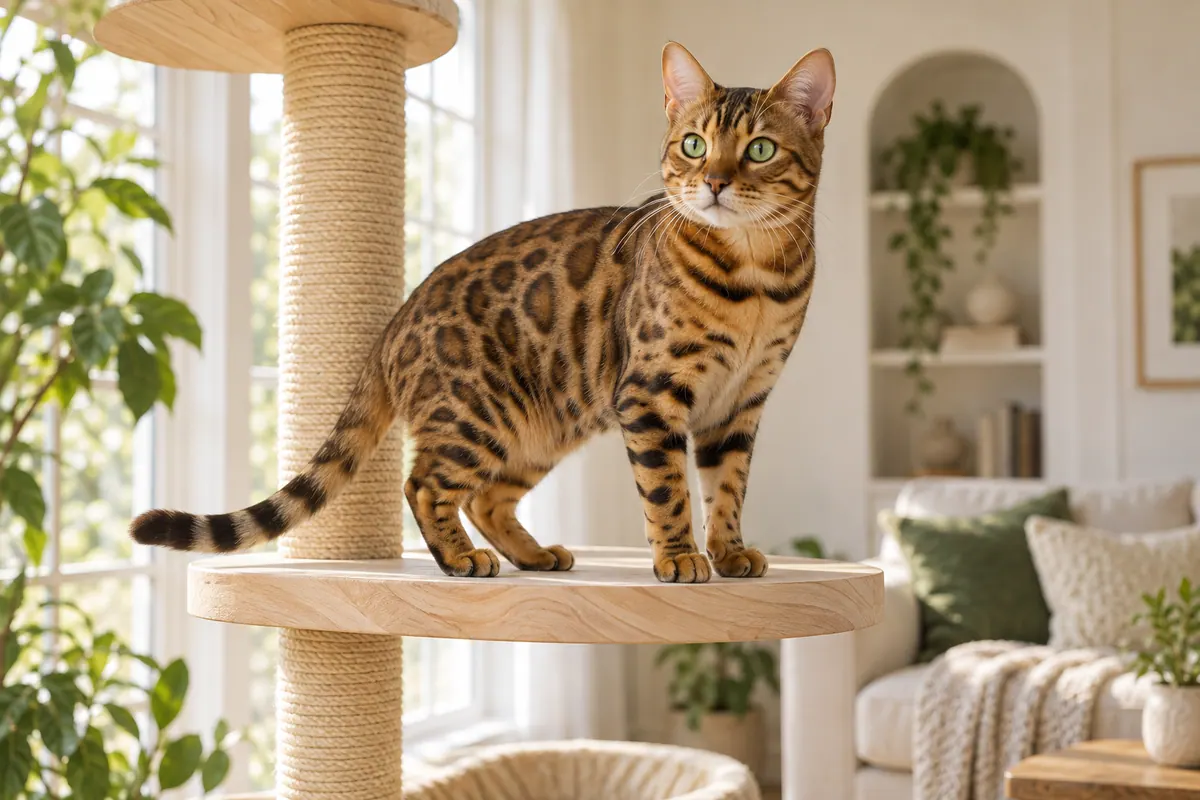
Cat trees for large cats: the shortlist
| Cat tree | Main reason to choose it |
|---|---|
| Catit Vesper High Base Giant | Broad layout and removable pads |
| New Cat Condos Deluxe 69-inch Tower | Solid wood with carpet and sisal |
| Cat Tree King Tiger | A large top bed and thick posts |
| Armarkat B7801 | A tall route with several levels |
| Mau Cento | A lower tree with two basket beds |
1. Catit Vesper High Base Giant: my first pick
The Catit Vesper High Base Giant pairs walnut-look boards with thick seagrass scratching posts. Its four levels include three memory foam pads. The listed size is 53.7 inches high, 35 inches wide and 25.2 inches deep.
I like this large cat tree for a main living space. Wipeable boards and removable pads give you separate ways to deal with hair and spills. The maker also offers spare parts, which matters when a good frame outlasts a worn post.
The boards are MDF with a laminate finish, not solid walnut. I would choose it for its layout and care needs, not a belief that a wood look means hardwood.
Best for: a roomy, open tree with replaceable parts. Watch for: its wide footprint. Tape the full base size onto your floor before ordering.
2. New Cat Condos Deluxe Tower: a carpeted wood frame
The New Cat Condos Deluxe 69-inch Tower uses solid wood, household-grade carpet and natural sisal rope. It has a 20-by-24-inch base, a 17-inch round top bed and a tunnel with a 12-inch diameter.
I would shortlist it for cats that like carpet underfoot. The tunnel gives a partly hidden rest spot, though its opening may be snug for a broad cat. Measure the opening, not just the tower.
Owner reviews on the seller's page are mixed on movement. Some praise the build; several mention wobble as cats jump. That is a reason to check placement and setup, not to repeat the maker's no-tipping claim as a guarantee.
Best for: a carpeted cat condo with a real wood frame. Watch for: carpet cleanup, tunnel fit and movement on your floor.
3. Cat Tree King Tiger: space for a big sprawl
The Cat Tree King Tiger in Dark Grey has a 24-by-17-inch top bed, two 18-inch hammocks and 5-inch posts. Those sleep-space sizes make more sense to me than a vague promise that a tree suits large cats.
This is a large cat tree with a large room claim. The maker lists a spread of about 73 inches when the hammocks extend out. Check the full shape and clearance, not just the base. The dark-grey version was marked sold out when checked, so confirm stock before planning around it.
I would choose it for cats that sprawl or share a tree by choice. I would not squeeze it beside a busy doorway.
Best for: large cat beds and a broad climbing setup. Watch for: weight, price and the space taken by side hammocks.
4. Armarkat B7801: a taller climbing route
The Armarkat B7801 stands 78 inches tall on a 24-by-20-inch base. It offers several levels, cat condos and scratching posts. The listed top perches are 15 inches square, and the posts are 3.5 inches across.
The height makes it a candidate for cats that like to climb. I would be less keen for a very long cat that wants to lie flat on the highest perch. A 15-inch square is not a large bed just because the tree is tall.
The stated 70-pound limit is for the tree as a whole. It is not a promise that each perch can hold that weight. Follow the current assembly and anchoring guidance.
Best for: several steps up to a high view. Watch for: perch size, ceiling clearance and access for cats with poor mobility.
5. Mau Cento: a lower lounge tree
The Mau Cento is 45.5 inches tall with a 23-inch base. It has two woven basket beds, washable pads, a lower cave and real branches wrapped in jute. Mau lists it for cats up to 23 pounds each.
I would choose it when looks and rest spots matter more than a long climb. The two baskets create separate cat beds without a tower near the ceiling. Its lower height may also be easier to place in a small room.
Do not use the weight limit as a fit guide. A light but long Bengal still needs enough room in the basket. Check the inside bed size and the route between levels.
Best for: a low, furniture-like lounge tree. Watch for: basket fit and less climbing height than the other cat trees here.
How to size a cat tree for large cats
Start with the cat, then the room. A large cat tree that fits your floor but has small cat condos can waste both space and money. I would use these four checks before comparing colors.
Measure the sleep space
Wait until your cat settles on a bed or blanket. Measure the space it uses while curled up and while stretched out. Compare those sizes with the inside of each cat bed. Raised rims and thick pads can reduce the usable area.
For enclosed cat condos, check both the entrance and the inside floor. A large outer box with a small doorway may be a poor match. If the seller lists only total tree height, ask for the bed and opening sizes before buying.
Think about the landing
A cat does not climb a tree like a person on a ladder. It may leap sideways, drop from the sofa or jump down from the top bed. Look at the clear space around each platform. A plush bed is less useful if another post blocks the route into it.
I prefer cat trees with a clear path up and down. In homes with multiple cats, a second way off a perch can matter more than one extra cat condo. Do not force cats that avoid each other to share one narrow route.
Check the base and the setup
A wide base helps, but it is only part of stability. Floor level, build quality, loose bolts and where a cat lands all matter. Follow the tree's own wall-anchoring instructions and use fixings suited to your wall.
Put cat trees on a firm, level surface. Check for movement before your cat climbs. Retighten parts as the maker directs, then keep checking as the tree wears. Stop use if a platform cracks or a post works loose.
Read weight limits with care
A total weight limit is not always a per-bed limit. Ask which part the number covers. Two large cats on one hammock create a different load from two cats on separate levels.
I would leave room below the stated limit and check the part sizes too. Large cats need physical space as well as a frame rated for their weight. A bold number on a box does not tell you how a tall tree moves during play.
Scratching posts, carpet and spare parts
Look for scratching posts long enough for your cat's usual stretch. Sisal rope, seagrass and jute have different textures. Keep your cat's current scratching preference in mind instead of choosing by color alone.
Carpet gives grip but holds hair. Smooth boards are easier to wipe, yet pads need to stay in place. Washable covers are useful only if removing and refitting them is simple enough that you will do it.
Before buying a large cat tree, look up one replacement post and one pad. Check whether you can order the exact part. I would rather maintain a sound frame than replace an entire piece of cat furniture because one small surface wore out.
The New Cat Condos care guide advises checking for wear and replacing damaged parts. That is a useful habit for any tree. Loose rope, exposed fixings and a weak shelf are reasons to act, not features to hide under a blanket.
Where should a large cat tree go?
A quiet view of the room is a good start. The AAFP and ISFM environmental guidelines explain that raised resting areas let cats watch their surroundings. They also support giving cats separate places to eat, rest, scratch and use the litter box.
A window can offer a view, but keep blind cords out of reach and check window security. Leave space for the full tree, open cupboard doors and your cat's landing zone. A large cat tree should not make a hallway hard to use.
In multi-cat homes, one huge tree may be less useful than several well-placed rest spots. A cat that blocks the main tree can still control its cat condos and beds. Spread resources around the home where you can.
For floor play between climbs, see our catnip toy picks. Keep play areas apart from the tray, and choose a cat litter that fits your cleanup routine.
Cat towers and cat condos: quick checks for cat owners
Cat towers tend to emphasize height. Cat condos add enclosed rest spots. Neither name tells you whether large cats will fit. For a big cat, check the inside bed size first, then the route up. Most cats need usable steps more than a dramatic tower.
Cat trees sold for a Maine Coon can also suit a Bengal, but the breed label is not a size standard. Long cats need room to stretch. Heavy cats need a sturdy base. Young cats climb fast, while older cats may want small gaps between platforms.
For multiple cats, look for more than one good place to rest. Multiple scratching posts can spread out daily use. Sisal scratching posts also offer a different feel from carpet or faux fur. Watch which scratching surfaces your cats already choose.
A well-built cat tree should feel stable when set up as directed. A heavy base and sturdy materials help, but check the joints too. No claim of exceptional stability can replace a sound build on a level floor. If large cats make it rock, fix the cause before more climbing.
Corner spaces can suit cat trees, but measure the full spread. Space-saving cat towers often trade wide beds for height. Cat condos with small doors may stay empty even when the tree itself is large. Leave room for paws and tails at the edge of each bed.
I would choose durable cat furniture with parts you can replace. A new cat tree looks good on day one; a useful one stays easy to clean and repair after daily use. Keep toys clear of routes where cats jump, and check that nothing catches a paw.
Which large cat tree is worth the space?
I would start with the Vesper High Base Giant for its broad layout and easy-care surfaces. I would choose the Tiger when larger beds matter most and the room can take its spread. The Cento makes more sense when you want lower resting spots.
Before you buy, write down the inside bed size, the full footprint and the cost of a spare post. Those three details tell you more about the right cat tree for large cats than height alone.